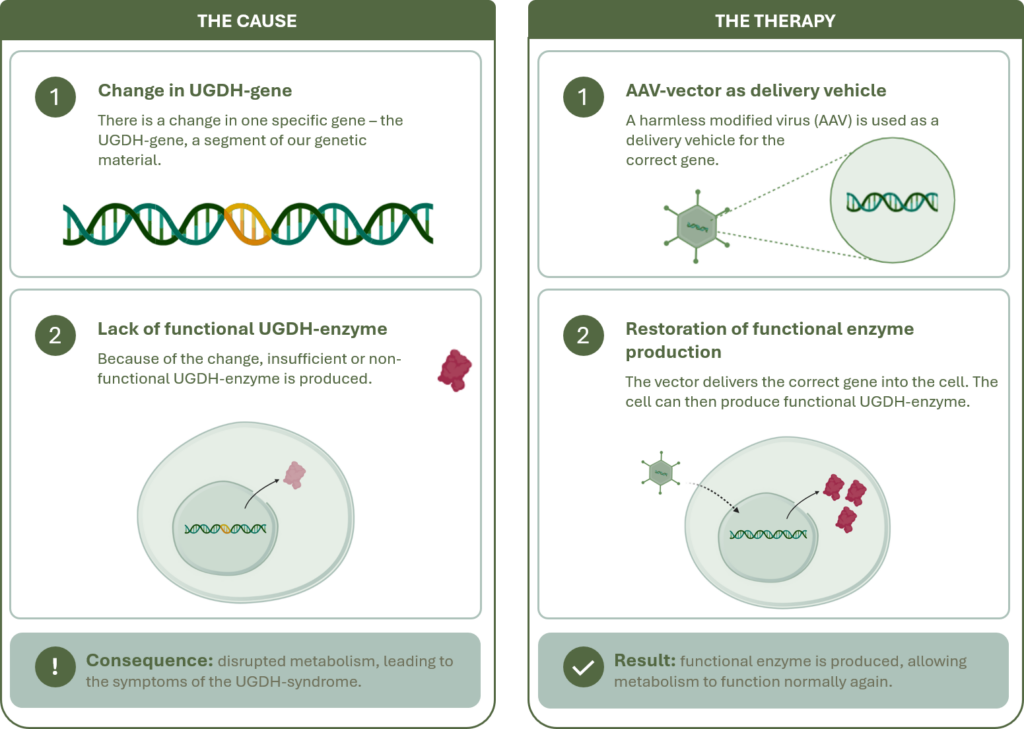
UGDH syndrome is caused by a change in the UGDH gene. As a result, insufficient UGDH enzyme may be produced, or the enzyme may not function properly, disrupting important biological processes and leading to the symptoms of the syndrome.
Because the cause of UGDH syndrome is directly linked to a single specific gene, this genetic change provides a clear target for the development of a treatment. In recent years, gene therapy has advanced rapidly, creating new possibilities for treating rare genetic disorders. These advances have made it possible to introduce genetic information into cells, enabling them to produce a functional protein. This makes gene therapy a promising approach to investigate for treating UGDH syndrome.
To this end, the Moiré Foundation has chosen an approach using an AAV vector (adeno-associated virus). AAV vectors are modified viruses that do not cause disease and can be used as a delivery vehicle to transport genetic information into cells in the body. This allows a functional copy of the UGDH gene to be delivered to cells, enabling them to produce sufficient UGDH enzyme that functions normally.
From genetic cause to gene therapy: an AAV vector delivers a functional copy of the UGDH gene to cells, with the aim of enabling the production of functional UGDH enzyme.
A step-by-step research program
The development of a gene therapy for UGDH syndrome is a careful and step-by-step process. Before a treatment can be administered to patients, several stages of research need to be completed. Each stage provides important information about the efficacy, safety and further development of the therapy approach.
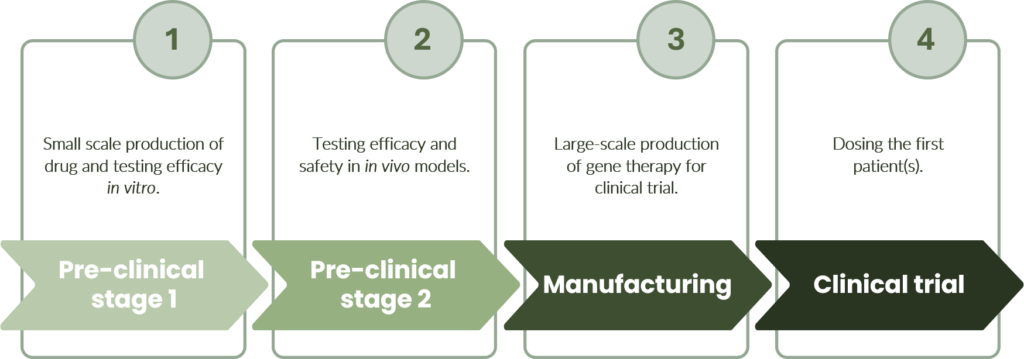
Together with an international research team, the Moiré Foundation has established a step-by-step research program for the development of a gene therapy for UGDH syndrome. The program consists of four consecutive phases, from the initial laboratory studies to a potential first application in patients.
The four consecutive phases form the research pathway outlined by the Moiré Foundation for the development of a gene therapy for UGDH syndrome.
The Moiré Foundation plays an initiating and coordinating role by bringing together scientific expertise, research partners and funding. Through this collaboration, the foundation aims to contribute to the development of a potential treatment for patients with UGDH syndrome.