

About the foundation
Establishment
The Moiré Foundation was founded by the parents of a child with UGDH syndrome. Driven by their personal involvement, they are committed to developing an effective treatment for this condition. The board members also bring relevant professional expertise, which contributes to the careful and effective implementation of the foundation’s objectives.
The board

Dr. Mieke Huijbers, chair.
Mieke has a background in molecular biology and biochemistry and obtained her PhD through research on oxidoreductase enzymology. Through this work, she developed in-depth expertise in the relationship between enzyme structure and biochemical activity. After a postdoctoral position in biocatalysis, she currently works as a lecturer in molecular biology and biochemistry at Leiden University of Applied Sciences.
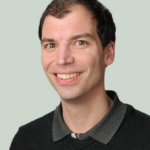
Dr. Sebastiaan Akerboom, secretary.
Sebastiaan is an inorganic chemist with expertise in metal-organic compounds. After obtaining his PhD, he worked for nine years in the R&D department of a multinational company, where he was involved in the planning and execution of research projects. He is currently engaged in research projects in the field of clean and sustainable energy.

Ing. Jolijn Kienjet-Ronken, treasurer.
Jolijn has a background in medical laboratory research and spent ten years studying genes involved in the development of various diseases, with the aim of developing new therapeutics. She later worked on the development of antibodies for applications in immunotherapy. She is currently a lecturer in the Biomedical Laboratory Science programme at Leiden University of Applied Sciences.

Dr. Anna Bennis, board member.
Anna has a background in neuroscience and obtained her PhD through research on stem cell therapy for macular degeneration. In addition to her experience as a business developer, where she established strategic partnerships between academic neuroscience research and the pharmaceutical and biotech industries, she has been active in education for many years. She currently works as a lecturer in molecular biology and regenerative medicine at Leiden University of Applied Sciences.
The board members serve on a voluntary basis and are responsible for defining and implementing the foundation’s policy.
More information about the foundation’s mission and objectives can be found on the dedicated page.
Origin of the name ‘Moiré Foundation’
The moiré effect is a visual interference pattern that occurs when two regular patterns are overlaid with a slight difference in spacing or angle. This interference creates a new pattern, consisting of lines or circles that appear to move or shift relative to one another.
In several ways, the moiré effect is associated with this foundation:
Ivan was very young when he became fascinated by the black metal wire ceiling lamps in the living room. When looking at these lamps and moving your head, moiré patterns become visible.
The moiré effect evokes associations with the disrupted patterns seen on an EEG in epilepsy, a key feature of UGDH syndrome.
In patients with UGDH syndrome, the structure of the extracellular matrix in the brain is disrupted. This can also be seen as a disruption of a pattern.